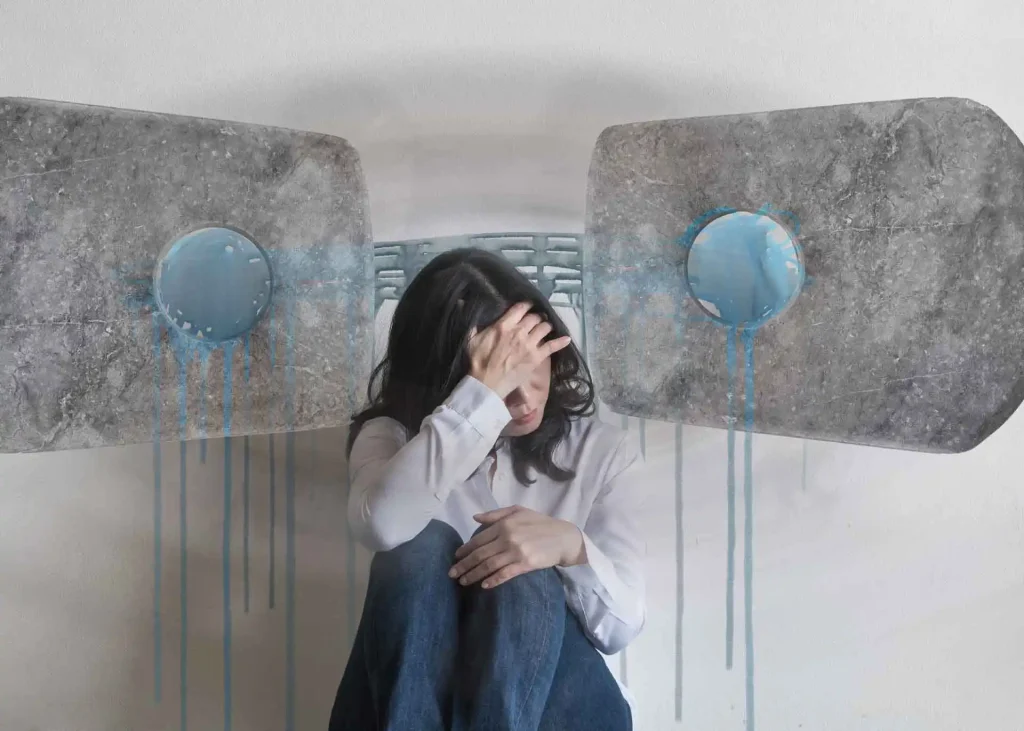
If you’ve wondered whether anxiety can cause head pressure, here’s the answer: yes. Anxiety can cause head pressure by contributing to muscle tension, changes in breathing, and the body’s stress response. However, other conditions can cause similar sensations, so it’s important to rule them out. Slow breathing, muscle relaxation, hydration, rest, and addressing the underlying anxiety can all bring relief. If symptoms keep coming back or start to interfere with daily life, an anxiety therapist in Chicago can help you understand and address what is going on beneath the surface.
What Is Anxiety Head Pressure?
Anxiety head pressure is a sensation of pressure in the head that can occur when you feel anxious or stressed. It may feel like a tight band wrapped around your head, someone pressing on your forehead, or your head feeling unusually heavy.
Anxiety-related head pressure is often linked to muscle tension, changes in breathing, and the body’s stress response. For many people, tightness around the head can slowly lead to dizziness and, in some cases, severe headaches.
Can Anxiety Make Your Head Feel Heavy?
Yes, anxiety can make your head feel heavy. Anxiety affects everyone differently, and for some, it manifests as a head that feels tight, heavy, or weighed down. This common physical symptom is easy to recognize because it often comes with shallow breathing or a racing heart.
Anxiety tightens the muscles in your neck, shoulders, scalp, and forehead, creating a sensation of heaviness or pressure in your head. Along with head heaviness, you may also experience a choking sensation, dizziness, and lightheadedness, and may even feel like you are about to faint.
What Does Anxiety-Related Head Pressure Feel Like?
Anxiety-related head pressure usually feels different from a sharp, throbbing headache. Many people describe it as a steady, dull pressure, like wearing a hat that’s a size too small.
Pressure or Tightness Around the Head
Anxiety-related head pressure often creates a sensation of squeezing, heaviness, or fullness. You may feel pressure across your forehead, temples, or the back of your head, as if something is pressing against your skull. This sensation often develops during stressful situations, periods of overthinking, or episodes of heightened anxiety.
Tension in the Head, Face, or Neck
Anxiety can cause involuntary muscle tension in the head, face, jaw, and neck. When the body activates its stress response, these muscles may remain contracted for extended periods, contributing to discomfort and a feeling of tightness. Clenching your jaw, feeling tightness around your temples, or experiencing stiffness in your neck and shoulders are common signs of this kind of tension.
Other Symptoms That May Occur With Anxiety
Anxiety-related head pressure may also occur with other physical and emotional symptoms. You might experience dizziness, lightheadedness, sweating, or trembling. Some people also have difficulty concentrating, restlessness, excessive worrying, or a sense of danger.
Sleep disturbances and fatigue may also contribute to a heavy feeling in the head. These symptoms often vary in intensity based on the level of anxiety you are feeling.
How Can Anxiety Cause Head Pressure?
Anxiety-related head pressure is primarily caused by an unregulated circulatory system. When you’re anxious, your body shifts into fight-or-flight mode. Your body experiences muscle tension, changes in breathing patterns, and your nervous system becomes more sensitive to physical sensations.
Muscle Tension
During the fight-or-flight response, muscles in the head, neck, shoulders, and face tense up. This tension can create pressure, heaviness, or tightness around the head. You may also feel discomfort in your forehead, temples, and the base of your skull.
Changes in Breathing
When you feel anxious, your breathing usually becomes faster and shallower. Breathing too quickly (hyperventilating) lowers carbon dioxide levels in your blood, which can cause dizziness, lightheadedness, tingling, and unusual sensations in the head.
The Body’s Stress Response
Your body’s fight-or-flight response activates when you feel anxious. The body releases stress hormones, including adrenaline, which can increase alertness, heart rate, and muscle tension. These physiological changes may contribute to physical discomfort, including head pressure and a sensation of heaviness. Prolonged stress can also interfere with sleep and relaxation, potentially making headaches more frequent.
Increased Awareness of Physical Sensations
Anxiety makes you more attentive to physical sensations that might otherwise go unnoticed. You may become increasingly aware of mild pressure, tightness, or heaviness in your head and interpret these sensations as signs of something serious. Even ordinary bodily sensations may feel distressing and intense.
Possible Cause | How It May Contribute to Head Pressure |
Muscle tension | Anxiety can tighten muscles in the head, neck, shoulders, and face, causing pressure or heaviness. |
Changes in breathing | Rapid or shallow breathing may cause hyperventilation, contributing to dizziness and unusual head sensations. |
Stress response | Adrenaline and other stress hormones can increase muscle tension and alertness, contributing to head discomfort. |
Increased awareness | Anxiety can make normal sensations feel more noticeable, intense, or concerning. |
How Anxiety and Head Pressure Can Become a Cycle
Frequent anxiety and head pressure can lock you into a self-perpetuating loop. The physical sensation can trigger worry, and worry can worsen the physical symptoms. When you become anxious, your body activates its stress response. You may unconsciously tighten the muscles in your jaw, neck, shoulders, and scalp. Your breathing pattern may also change, which contributes to head pressure or heaviness.
Once you feel the head pressure, you start paying close attention to it. You might repeatedly check how your head feels or wonder why it’s happening. If you are concerned that the pressure could indicate a serious problem, your anxiety can rise, making you even more alert to physical sensations and the pressure more noticeable. Because anxiety can make any head sensation feel serious, it helps to know what can cause head pressure.
What Other Causes Can Lead to Head Pressure?
Dizziness, lightheadedness, or a pressing sensation near your forehead doesn’t always mean anxiety is the cause. Sometimes, it could be sinus problems, dehydration, tension, headaches, and several other conditions that can cause similar sensations.
Tension Headaches
Tension headaches happen when the muscles around the neck, scalp, and face stay contracted for a long time. This can also feel like a tight band squeezing around your forehead, temples, or the back of your head. Several common factors can cause tension headaches, including poor posture, prolonged screen time, and unconsciously clenching your jaw for long periods.
Sinus and Allergy Symptoms
Allergies or a sinus infection can also cause pressure in your head. With an active allergy or sinus infection, the inner lining of your nasal passages swells, causing pressure around your forehead, cheekbones, and behind your eyes.
The pressure intensifies when you lie down or tilt your head forward, and it usually comes with nasal congestion or a runny nose.
Dehydration and Fatigue
Dehydration and fatigue can both cause head pressure. When your body is dehydrated, the blood vessels in your brain temporarily narrow. Combined with fatigue, this disrupts your brain’s normal function, making your head feel heavy and foggy. You may also notice a dull ache along with trouble concentrating.
Other Possible Causes
Other possible causes for head pressure can include ear issues, sleep deprivation, or medication overuse.
Long periods of screen use, uncorrected vision problems, or close-up work can cause forehead pressure, blurred vision, and difficulty focusing. In rare cases, very high blood pressure can also cause a severe headache.
When Should You Seek Medical Attention for Head Pressure?
Mild head pressure is normal and usually goes away with deep breathing and stretching. But if the following points sound familiar, it is time to seek medical attention right away if the head pressure:
- Starts suddenly and peaks within about a minute
- Comes with weakness, numbness, confusion, fainting, or difficulty breathing
- Is severe and comes with a fever and a stiff neck
- Occurs after a head injury
- Comes with repeated vomiting, seizures, or changes in alertness
- Causes sudden vision changes, such as blurred vision
How to Get Rid of Anxiety Head Pressure
Once a medical cause has been ruled out, the strategies below can help ease anxiety-related head pressure. Because you start feeling dizzy, lightheaded, or fatigued after an anxiety attack, it is important to calm yourself down and physically release the muscle tension. Your body’s stress response is directly tied to its physical response, so calming your body helps calm your mind.
Identify Anxiety Triggers
Start by noticing what triggers your anxiety. Track patterns of events or situations that make you feel uncomfortable and anxious, such as a specific time of day, social interactions, work-related factors, or physical triggers like missing a meal. Note when the head pressure starts and whether it gradually builds up throughout the day.
Relax Your Muscles
While you are in the middle of an anxiety attack and your head starts feeling heavy, focusing on your physical symptoms is important. Progressive muscle relaxation (PMR) and gentle neck stretches can release tension in your head, neck, and shoulders. With PMR, you tense and then release one muscle group at a time, working from your toes up to your shoulders, neck, and forehead.
Practice Deep Breathing
Deep breathing is also a helpful technique in fighting anxiety and head pressure. Box breathing (inhaling, holding, exhaling, and holding again for four counts each) helps regulate the nervous system and slow down your breathing. Repeating it four or five times in a row can help bring some relief. Diaphragmatic breathing, which uses your belly instead of your chest, can also help counter shallow breathing.
Rest and Stay Hydrated
If the head pressure feels too much, hydrate and rest. Proper hydration improves the blood flow to the brain and helps you think properly. Taking a sensory break, such as turning off screens, dimming the lights, or closing your eyes for a few minutes, can help your nervous system return from fight-or-flight mode.
Reduce Stress
Reducing everyday stress is a long-term solution that can help lower anxiety over time. Setting clear boundaries with others, like saying no to extra tasks or responsibilities, can help you feel less overwhelmed at the end of the day. Daily decompression activities like walking, decluttering, listening to music, or reading can also help with negative thoughts.
Address Underlying Anxiety
You have to address the underlying causes of anxiety if you want long-term relief. Many people who experience frequent anxiety attacks benefit from mental health counseling. Approaches that can help manage anxiety include:
Approach | What It May Help With |
Deep breathing | Calming physical symptoms such as rapid breathing and tension. |
Mindfulness | Reducing worry and bringing attention back to the present moment. |
Exercise | Lowering stress, improving mood, and supporting better sleep. |
Progressive muscle relaxation | Easing muscle tension and physical stress. |
Healthy sleep routine | Improving sleep difficulties that can accompany anxiety. |
Psychotherapy | Exploring personalized strategies for managing persistent or severe anxiety. |
How Can Therapy Help With Anxiety?
Therapy can help you understand what triggers your anxiety, where it comes from, and how it affects your thoughts and body. In psychotherapy, you and your therapist explore the experiences, relationships, and patterns that may be feeding your anxiety. Understnaind these root causes can make anxiety, and the physical symptoms that come with it, easier to manage over time.
Conclusion
Anxiety can cause head pressure, heaviness, and tightness through muscle tension, changes in breathing, and the body’s natural stress response. While these sensations can be uncomfortable, techniques such as deep breathing, progressive muscle relaxation, staying hydrated, getting adequate rest, and stress reduction may help relieve these sensations in the moment.
Head pressure can also come from tension headaches, sinus problems, dehydration, or fatigue, so seek medical attention if symptoms are sudden, severe, or persistent. When anxiety is the source, addressing what’s driving it can help keep the symptoms from returning. At Depth Counseling, our therapists help clients explore the roots of their anxiety, in person in Chicago’s Loop and Ravenswood neighborhoods and through telehealth across Illinois.
Frequently Asked Questions
Why do I feel pressure in my head when I’m anxious?
Anxiety can activate your body’s stress response, causing muscles in your scalp, forehead, jaw, neck, and shoulders to tighten. Changes in breathing may also contribute to dizziness and unusual head sensations. Increased attention to physical symptoms can make pressure or heaviness feel more noticeable during periods of anxiety or stress.
Can anxiety cause other physical symptoms?
Yes, anxiety can cause several physical symptoms in addition to head pressure. These may include dizziness, lightheadedness, sweating, trembling, rapid heartbeat, muscle tension, shortness of breath, fatigue, stomach discomfort, and sleep difficulties.
How long does anxiety head pressure last?
How long anxiety-related head pressure lasts varies from person to person and depends on the level of stress or anxiety involved. For many people, the sensation eases as they relax and their stress response settles. If the head pressure happens often or worsens, talk with your doctor to rule out other possible causes. If anxiety is found to be the source, a therapist can help you address what’s going on under the surface.
When should I see a doctor for head pressure?
Seek medical attention if head pressure is sudden, severe, reaches maximum intensity quickly, or keeps worsening. Seek urgent care if it occurs with weakness, numbness, confusion, fainting, seizures, repeated vomiting, difficulty breathing, fever with a stiff neck, or sudden vision changes. Persistent symptoms also warrant medical evaluation.
What can help with anxiety head pressure?
Several strategies may help relieve anxiety-related head pressure. Try slow, controlled breathing, progressive muscle relaxation, gentle neck stretches, adequate hydration, rest, and reducing sensory stimulation. Regular exercise, healthy sleep habits, mindfulness, and stress management may provide longer-term benefits. If anxiety frequently causes physical symptoms, psychotherapy can help you address what is driving it.